

Carried by 12 nurseries
View Availability at NurseryData provided by the participants of the Consortium of California Herbaria
View additional distribution information on the Jepson eflora
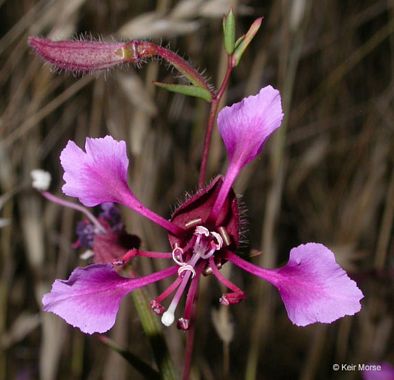
Elegant clarkia (Clarkia unguiculata) is an annual wildflower in the Evening-Primrose family (Onagraceae). It is endemic (limited) to California, but is often sold in wildflower seed mixes throughout the country. Elegant clarkia has tall, thin stems, narrow leaves, and four spade-shaped petals in various shades of pink. Butterflies, moths, and bees are attracted to its flowers. It blooms in summer, when many wildflowers are finished for the year.
Another popular name is woodland clarkia, and its natural habitat is indeed open woodlands. It usually is found growing in oak woodlands or mixed evergreen forest, with native grasses and other wildflowers that appreciate part shade. Sow seeds in fall and let the rain do the rest. Allow to self-sow in fall before cutting back dead stocks. Grow this clarkia in the middle or back of a flower bed where its tall, whimsical flowers make a charming backdrop. Or create a mini-meadow under an oak tree with native bunchgrasses, wild onion, white globe lily, and purple chinese houses.
Annual herb
3 ft Tall
3 ft Wide
Upright Columnar
Fast
Slight

Red, Pink
Summer, Fall
Containers
Full Sun, Partial Shade, Deep Shade
Low
Never irrigate once established
Easy
Tolerates cold to 10° F
Fast, Medium, Slow
Adaptable.
Soil PH: 6.0 - 8.0
Because this is an annual, it is best propagated from seed in fall in an area that has already been cleared of weeds. A very light layer of organic mulch will allow seedlings to push through. It will typically reseed itself each year.
1, 2, 3, 4, 5, 6*, 7, 8, 9, 14, 15*, 16*, 17*, 18, 19, 20, 21, 22, 23, 24
Woodlands
Chaparral, Coastal Scrub, Foothill Woodland, Perennial Grassland--Remnant Non-desert Grassland
Elegant Clarkia occurs as an understory plant with oaks and pines. Other understory plants that occur with it include various native grasses, Mariposa Lilies (Calochortus spp.), Western Houndstongue (Adelinia grandis), Blue-Eyed Grass and Yellow-Eyed Grass (Sisyrinchium spp.), and other annual wildflowers
Butterflies and moths supported
2 confirmed and 3 likely
Mariposa Forester
Alypia mariposa
Clark's Day Sphinx Moth
Proserpinus clarkiae
White-lined Sphinx
Hyles lineata