

Carried by 0 nurseries
View Availability at NurseryData provided by the participants of the Consortium of California Herbaria
View additional distribution information on the Jepson eflora
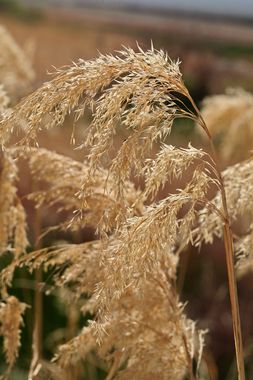
Common reed (Phragmites australis) is a large perennial grass found in wetlands throughout temperate and tropical regions of the world. Common reed commonly forms extensive stands (known as reed beds), which may be as much as a square kilometer or more in extent. Where conditions are suitable, it can spread 16 feet or more per year by horizontal runners, which put down roots at regular intervals.
It can grow in damp ground, in standing water (up to three feet or so deep), or even as a floating mat. One of the few native plants that the California Invasive Plant Council has determined is invasive in regions outside its natural range.
The erect stems grow to 6 to 20 ft tall. The tallest plants grow in areas that have hot summers and fertile growing conditions.
Common reed is sometimes regarded as the sole species of the genus Phragmites, though some botanists divide Phragmites australis into three or four species. In particular, the South Asian Khagra Reed (P. karka) is often treated as distinct.
Grass
7 - 20 ft Tall
Upright
Fast

White
Summer
Water features or wet habitats
Full Sun
Moderate
Standing
Adaptable, tolerant of sand, loam and clay.
1, 2*, 3*, 4, 5, 6*, 7*, 8*, 9*, 10*, 11*, 12, 14*, 15, 16, 17, 18*, 19*, 20*, 21*, 22*, 23*, 24
Pond and lake edges, sloughs, marshes
Alkali Sink, Chaparral, Creosote Bush Scrub, Foothill Woodland, Valley Grassland, Yellow Pine Forest, Wetland-Riparian
Butterflies and moths supported
1 confirmed and 0 likely
Yuma Skipper
Ochlodes yuma