

Carried by 0 nurseries
View Availability at NurseryData provided by the participants of the Consortium of California Herbaria
View additional distribution information on the Jepson eflora
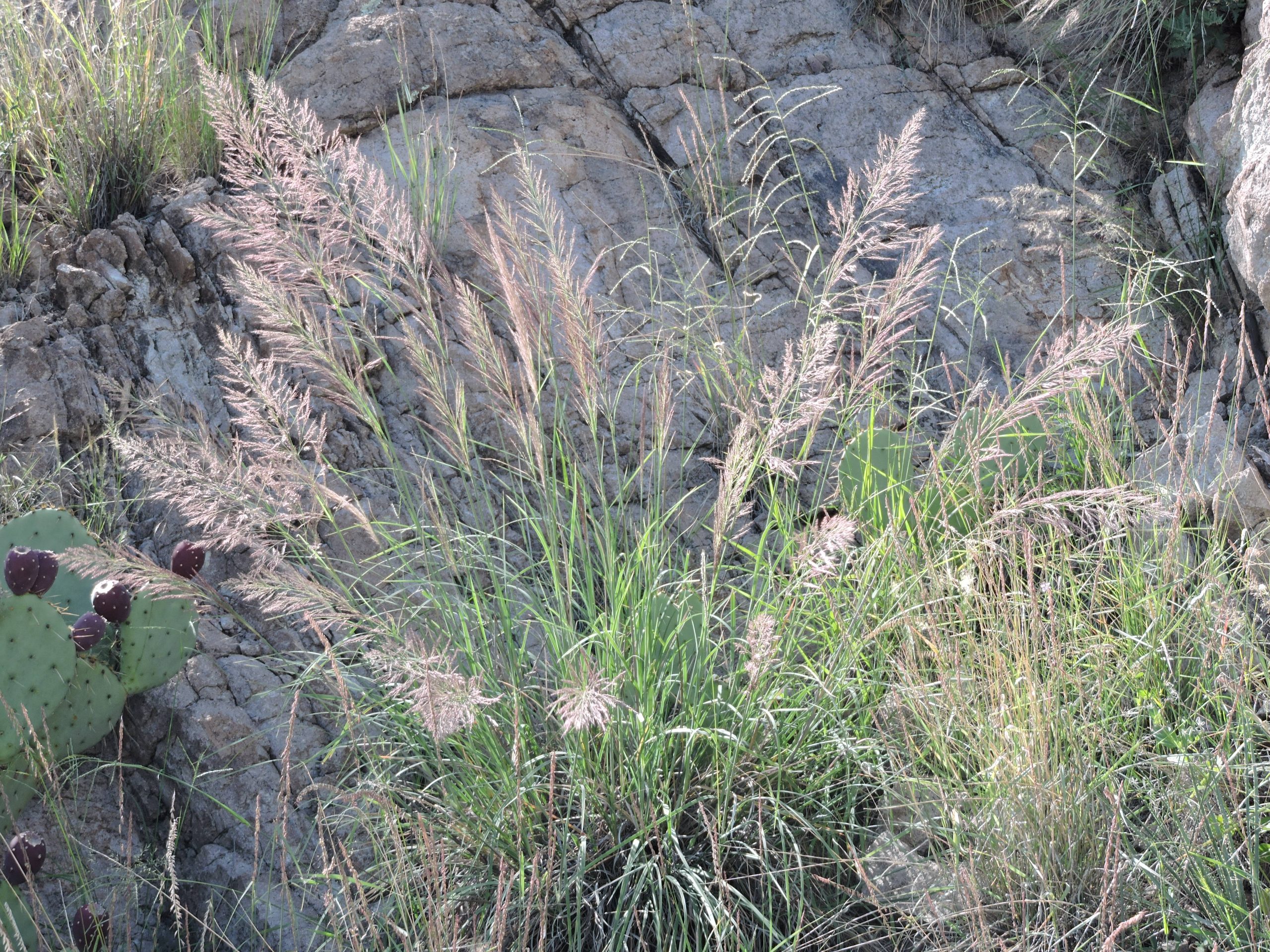
Bull grass (Muhlenbergia emersleyi) is a grass valued for both wildland restoration and water-wise landscapes. In California it holds a California Rare Plant Rank of 2B.2, meaning it is rare, threatened, or endangered in the state but more common elsewhere. It is known from only a few occurrences in the Santa Rosa and San Jacinto mountains of Riverside County, where it grows in relatively specialized conditions.
This perennial bunchgrass forms dense, upright clumps of blue-green to pale green foliage, typically reaching 2–3 feet tall and about as wide. Narrow leaves arise from the base, creating a tidy mound that works well in naturalistic plantings. In late summer to fall, bull grass produces open, airy panicles with purplish to tan flower spikes that catch the light and add subtle movement and texture to the landscape.
In the wild, bull grass is found in montane chaparral and along washes or rocky slopes with seasonally available moisture. It often flowers in response to summer monsoon rains, which partly explains why it was documented relatively late by botanists. In gardens, it is drought-adapted once established and performs best in full sun to part shade with well-drained soils. It is well suited to meadow plantings, slope stabilization, and habitat gardens where a soft, natural look is desired.
To maintain a healthy, attractive clump, cut plants back hard to about 6 inches from the ground in April to refresh growth, or cut back every few years to remove accumulated dead material.
Grass
Fountain, Mounding
Fast, Moderate
Winter Deciduous
Summer, Fall
Bank stabilization, Lawn alternative
Full Sun
Low
Max 1x / month once established
Easy
https://www.cnps.org/rare-plants/rare-plant-of-the-month-bullgrass-44766
https://www.smgrowers.com/products/plants/plantdisplay.asp?plant_id=2890